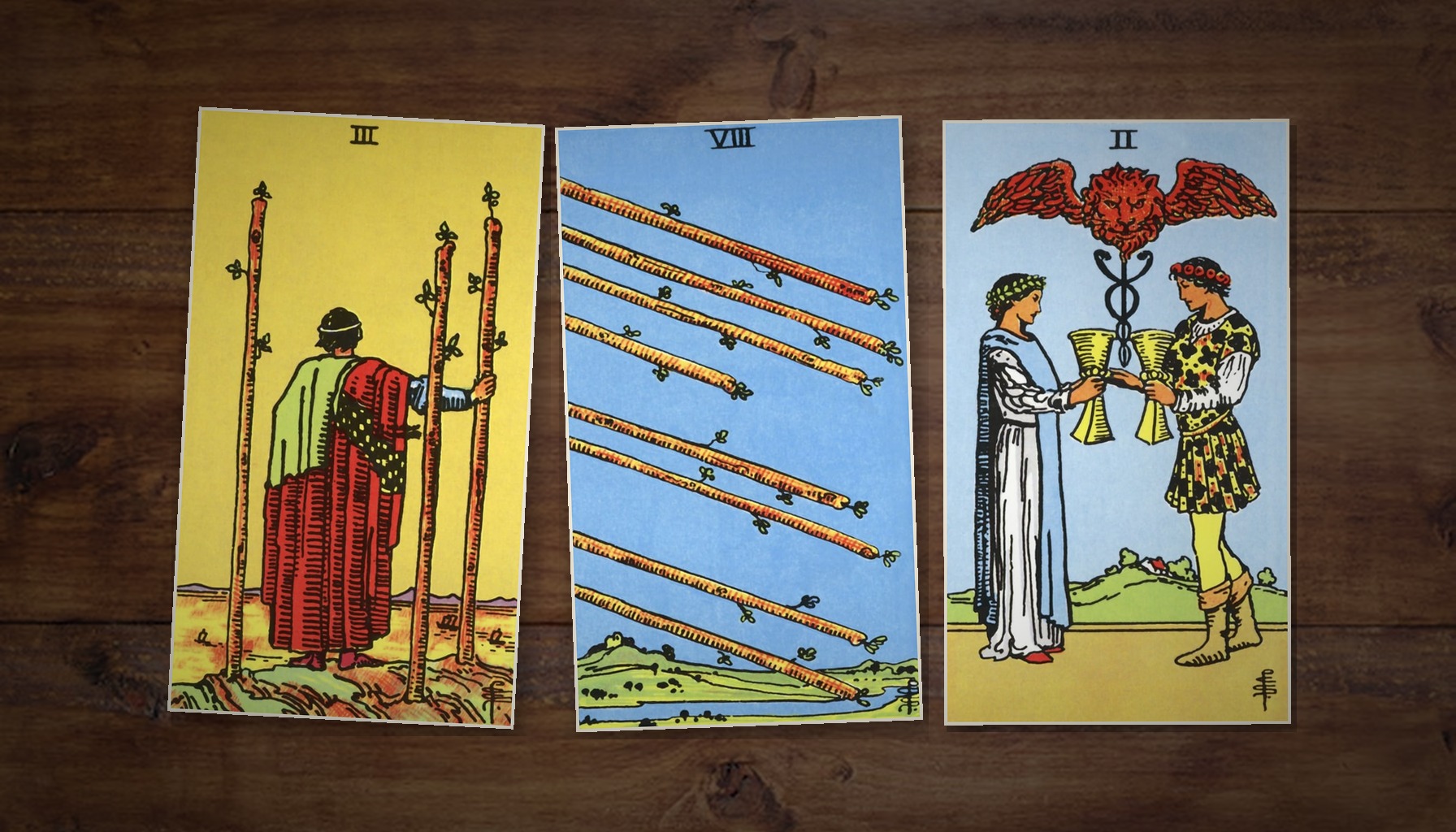
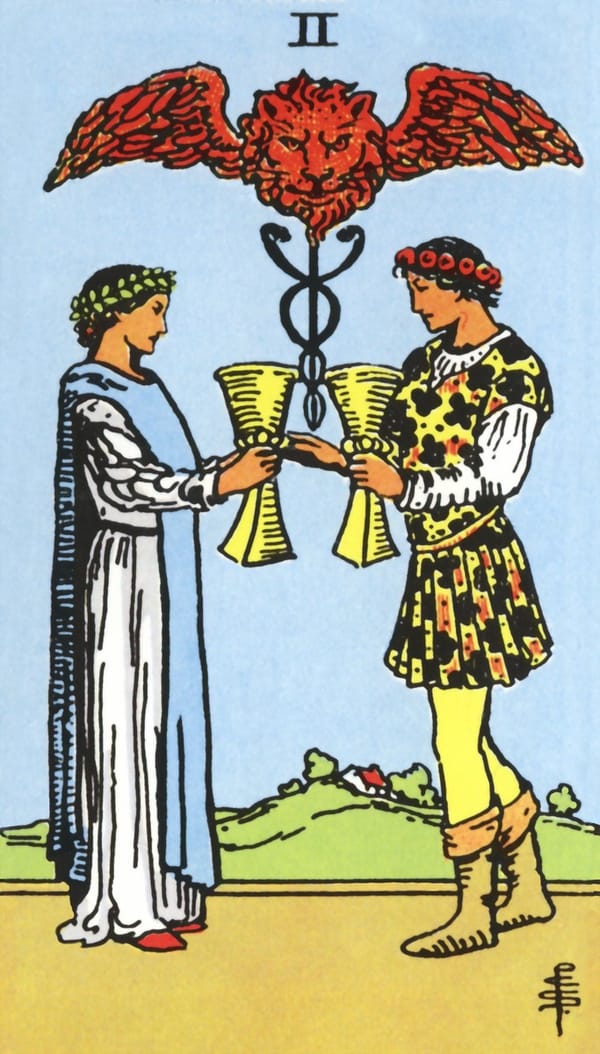
Two people stand facing each other, each holding out a golden cup. Between them rises a caduceus — two snakes winding around a staff, topped by a winged lion's head. Their bodies are angled toward each other. They're close but not touching. The cups are being offered but neither has been received yet.
That's where you are right now. The offering stage. Two people holding out something real and seeing whether the other person takes it. It's electric and terrifying and you've been checking your phone every eleven minutes.
The Danger of Reading Too Early
You went on three great dates and now you want to pull a full Celtic Cross about your soulmate potential. Don't.
In the first few weeks, your brain is flooded with chemicals designed to make you believe this person is the most fascinating human who ever lived. Neuroscientists studying limerence have mapped exactly how dopamine and norepinephrine hijack judgment in early romance. Your tarot readings during this phase don't reflect the relationship. They reflect your dopamine levels. Every card looks like a love story. The Five of Swords becomes "passionate intensity." The Tower becomes "life-changing connection."
Wait until the butterflies settle enough for you to hold a card without projecting your entire future onto it. Around month two or three, your readings will actually show you something useful because you'll have real data — how they handle conflict, whether they follow through, what it feels like to be with them on a boring Tuesday.
Questions for Month One vs Month Three
Month One, keep it about you, not them:
- Am I being myself, or performing a version of myself I think they'll like?
- What am I overlooking because I want this to work?
- What do I need to feel safe that I'm not asking for?
Month Three, you can start asking about the dynamic:
- What does this person need from a partner that they might not be saying?
- Where do our communication styles clash?
- What pattern from my last relationship am I repeating here?
The month-three questions require information the cards can't give you in month one. You have to live through enough actual moments together to produce something the reading can work with.
The Card That Says "Pay Attention to This"
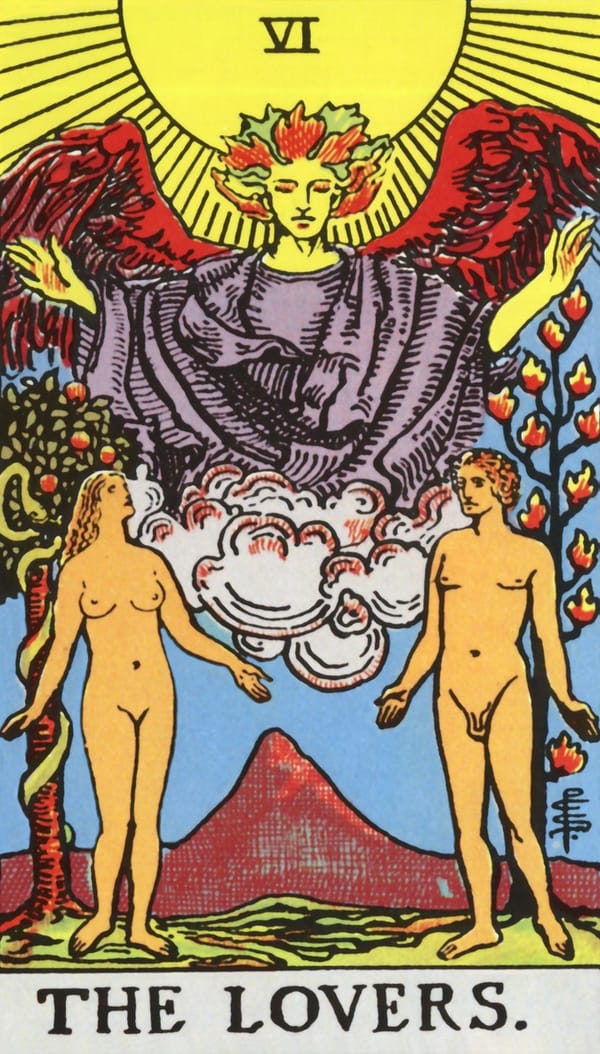
Two naked figures stand beneath a giant angel with red wings and a purple robe. The sun blazes above. Behind one figure, an apple tree with a serpent. Behind the other, a tree with twelve flames instead of fruit. Between them, a volcanic mountain.
The Lovers card in a new relationship reading doesn't mean what you think it means. It's not "congratulations, you found your person." It's about choice. Look at the card again — the man looks at the woman, but the woman looks at the angel. They're not staring into each other's eyes. They're each looking at something different.
The Lovers in early relationship readings asks: are you choosing this person for who they actually are, or for who you need them to be? The apple tree and the serpent behind the woman recalls temptation and knowledge. The tree of flames behind the man suggests passion and desire. Between them, a volcano — potential for both creation and destruction.
This card shows up when the relationship is at a real choice point. Not "should we date?" but "are we choosing to see each other clearly, or are we choosing the fantasy?" The angel overhead represents a higher awareness — the perspective you need to make this choice with open eyes.
A Spread for "Is This Real?"
When the new relationship energy starts to settle and you genuinely want to know what you're working with:
Card 1: What's real between us. Not what you hope is real. Not what looks real from the outside. The actual substance underneath the attraction.
Card 2: What's projection. What you're seeing in them that's actually about your own needs, patterns, or unhealed stuff from previous relationships.
Card 3: What this relationship needs from me. Not what the other person needs. What the relationship itself — the space between you — requires to grow.
If Card 2 shows heavy imagery, don't panic. Everyone projects in new relationships. The card isn't saying it's all fake. It's showing you which parts of your perception to double-check against reality.
When the Ace of Cups Overflows
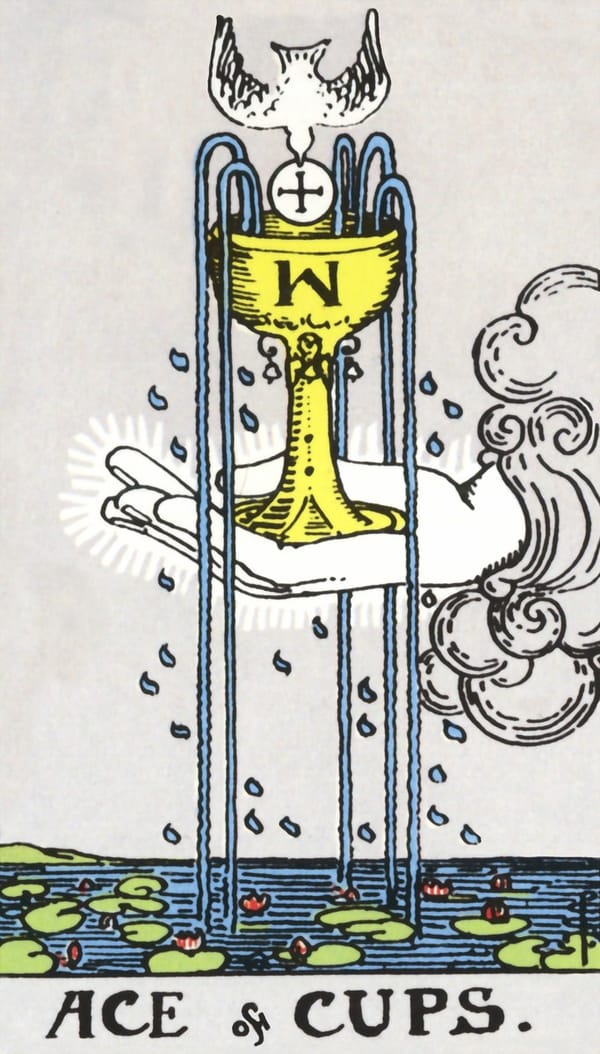
A hand emerges from clouds holding a golden chalice. Five streams of water pour from its rim into a lake below where lotus flowers bloom. A dove descends into the cup carrying a communion wafer marked with a cross. Water droplets fill the air like rain.
The Ace of Cups is the card of emotional beginning — genuine, overflowing, more feeling than your container can hold. When it appears in a new relationship reading, it confirms that what you're feeling is real. Not necessarily lasting, but real. The emotions aren't manufactured or imagined. Something genuine opened in you.
The overflow matters. Five streams pouring out of one cup means your feelings are already spilling into other areas of your life. You're kinder to strangers. You're more patient at work. You write better. You sleep better. That's the Ace of Cups effect — real emotional opening changes more than just the relationship.
But notice: the hand comes from a cloud. Beginnings are offered, not guaranteed. The Ace gives you the raw material. What you build with it depends on choices, communication, and two people deciding to keep showing up for each other past the point where it stops being effortless.
For more layouts to try, see the tarot spreads guide.
New to tarot? The learn tarot page answers the most common questions beginners ask.
Keep Reading
If you're reading after a separation, tarot after a breakup has spreads designed for that.